Are you a passionate diver who loves to share your knowledge and excitement about the underwater world? If so, becoming a PADI IDC Staff Instructor is the perfect way to take your career to the next level.
The PADI IDC Staff Instructor course is the first step in becoming a PADI Course Director. This course will teach you how to effectively teach and mentor other instructors, as well as how to run PADI Instructor Development courses.
The course is conducted over 11 days and includes both classroom and practical components. You will learn how to conduct all of the PADI Instructor level courses, as well as how to teach instructor-level specialties.
At the end of the course, you will be able to:
– Teach and mentor other instructors
– Conduct PADI Instructor Development courses
– Teach instructor-level specialties
If you are interested in becoming a PADI IDC Staff Instructor, please contact us. We would be happy to answer any questions you have about the course or the application process.
The PADI IDC Staff Instructor (Bali) course is designed to give instructors the skills and knowledge they need to teach PADI courses. The course is divided into three parts: academic training, practical training, and an instructor examination.
Academic training covers topics such as dive theory, physics, and physiology. Instructors will also learn about PADI educational systems and how to teach PADI courses.
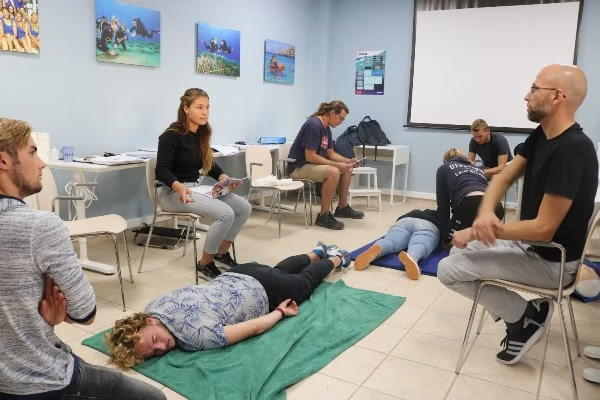
Practical training includes both classroom and in-water sessions. Instructors will learn how to conduct skills demonstrations and give presentations. They will also practice teaching skills to students.
The instructor examination is a two-part exam that tests an instructor’s knowledge of dive theory and their ability to teach PADI courses.
Are you interested in becoming a PADI IDC Staff Instructor? Join our program in Bali and learn from some of the best instructors in the world!
Our program is designed to give you the skills and knowledge you need to become a successful instructor. You’ll learn how to teach a variety of courses, from beginner to advanced. And you’ll have the opportunity to work with students of all levels, from all over the world.
After completing the program, you’ll be qualified to teach PADI courses at dive centers and resorts around the world. So if you’re looking for a new challenge, and a way to see the world, this is the program for you!
If you’re a certified PADI Instructor looking to take your career to the next level, the PADI IDC Staff Instructor course in Bali is the perfect way to do it. Here are 5 reasons why:
1. Gain international recognition as a PADI Instructor
PADI is the world’s largest scuba diving training organization, and IDC Staff Instructors are some of the most highly qualified instructors in the industry. By becoming a PADI IDC Staff Instructor, you will be able to teach courses and specialties at PADI Dive Centers and Resorts around the world. This recognition will open up many doors for you in the diving industry, and will allow you to share your passion for diving with others.
2. Be able to teach PADI courses anywhere in the world
The PADI IDC Staff Instructor (Bali) is a highly qualified and experienced instructor who is able to teach PADI courses anywhere in the world. The Staff Instructor has a wealth of knowledge and experience to share with students, and is able to provide them with the best possible education and training.
3. Get access to exclusive Instructor resources
PADI Instructor Development Course (IDC) Staff Instructors are highly qualified and experienced PADI Professionals who are instrumental in delivering the PADI System of diver education. They provide invaluable support and guidance to PADI Instructors during the IDC, and their expertise is an essential component of the PADI Instructor Development program.
PADI IDC Staff Instructors are typically chosen for their extensive experience as PADI Instructors, their commitment to professional development, and their dedication to providing the highest quality of diver education. They must also possess excellent communication and people skills, as well as a passion for teaching and mentoring others.
PADI IDC Staff Instructors play a vital role in ensuring that PADI Instructors are properly prepared to teach the PADI System of diver education. They provide first-hand knowledge and insight into the PADI IDC, and they are an invaluable resource for new and aspiring PADI Instructors.
4. Enjoy continued support from PADI
why_reason_4_paragraph
5. Be a part of the largest dive community in the world
PADI IDC Staff Instructors play a vital role in the PADI Instructor Development System. They are responsible for training and mentoring new instructors, and ensuring that they are ready to teach PADI courses.
PADI IDC Staff Instructors are highly experienced and knowledgeable instructors who are passionate about sharing their love of diving with others. They are committed to providing the best possible instruction and support to new instructors, and to helping them grow and develop as dive professionals.
PADI IDC Staff Instructors are an important part of the PADI Instructor Development System, and they play a vital role in the PADI community.
The PADI IDC Staff Instructor Course is the first step in becoming a PADI Instructor. This course will teach you how to conduct the PADI Instructor Development Course, as well as how to teach a variety of PADI courses. Upon successful completion of this course, you will be qualified to teach the PADI IDC, as well as a variety of other PADI courses.
Diving theory is the scientific study of diving. It encompasses the physics and physiology of diving, and is used to explain how diving works and the risks associated with it. Diving theory is used to develop and improve safety procedures and equipment, and to train divers in safe diving practices.
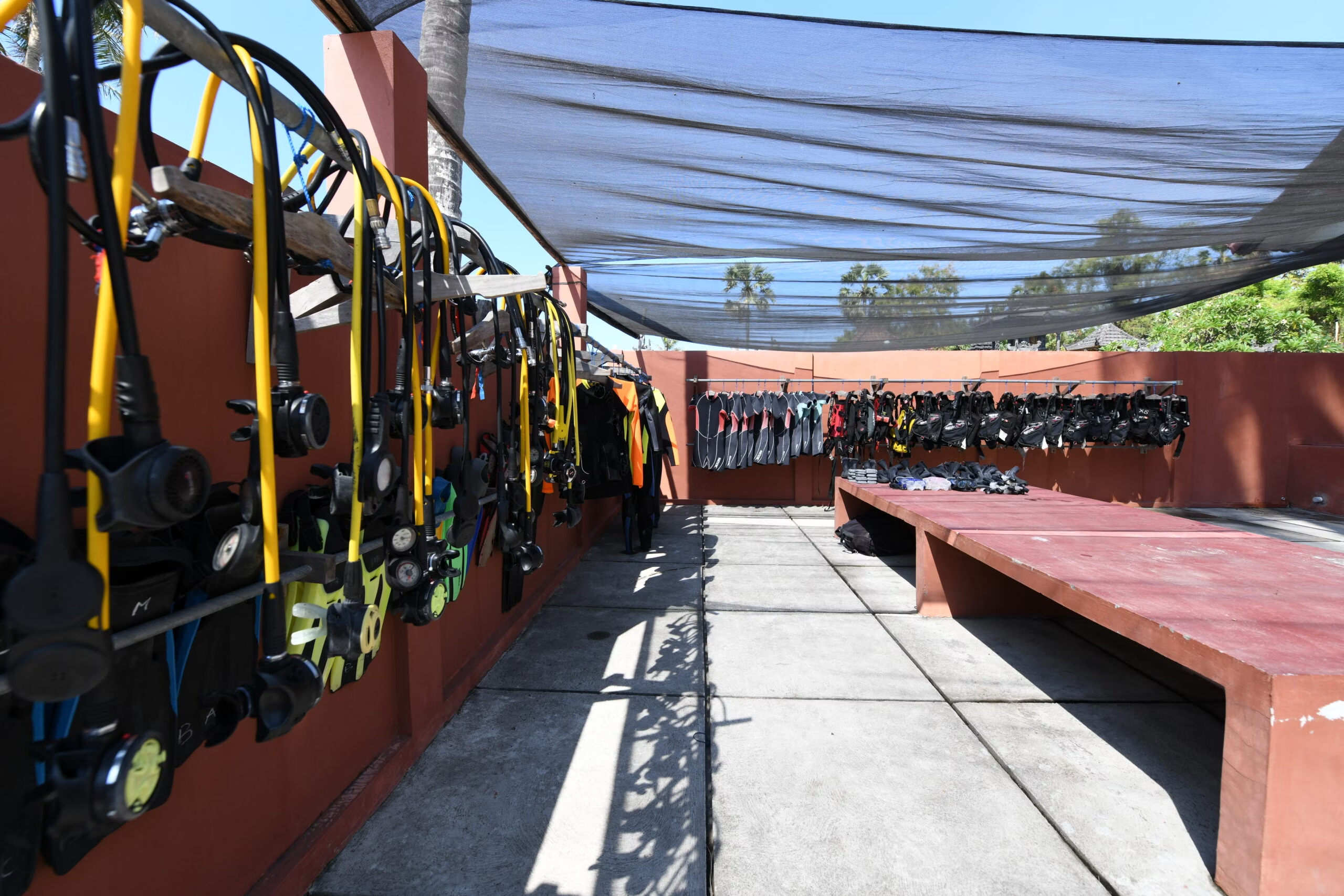
Diving equipment includes everything that a diver needs to be able to dive safely and comfortably. This includes things like a wet suit or dry suit, mask and snorkel, fins, regulator, and buoyancy control device.
There are a variety of diving techniques that can be used to explore the underwater world, including snorkelling, free diving, scuba diving, and rebreather diving. Each of these techniques has its own advantages and disadvantages, and it is important to choose the right one for the specific situation.
Snorkelling is a great way to get started in underwater exploration. It is relatively easy and does not require any special equipment or training. However, it has its limitations. Snorkellers can only stay underwater for a short period of time and they cannot go very deep.
Free diving is another popular way to explore the underwater world. Like snorkelling, it does not require any special equipment or training. However, free diving has its own dangers and limitations. Free divers can only stay underwater for a short period of time and they can only go down to a certain depth before they need to surface for air.
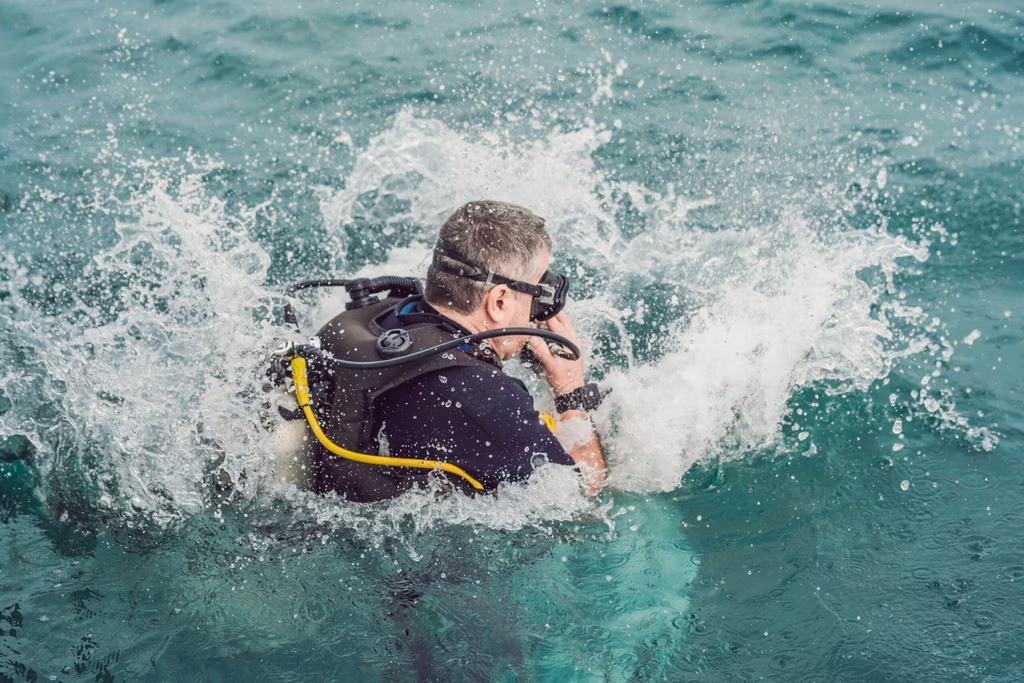
Scuba diving is the most popular type of diving. It allows divers to stay underwater for extended periods of time and to explore the depths of the ocean. Scuba diving requires special equipment and training, but it is worth it for the increased exploration it allows.
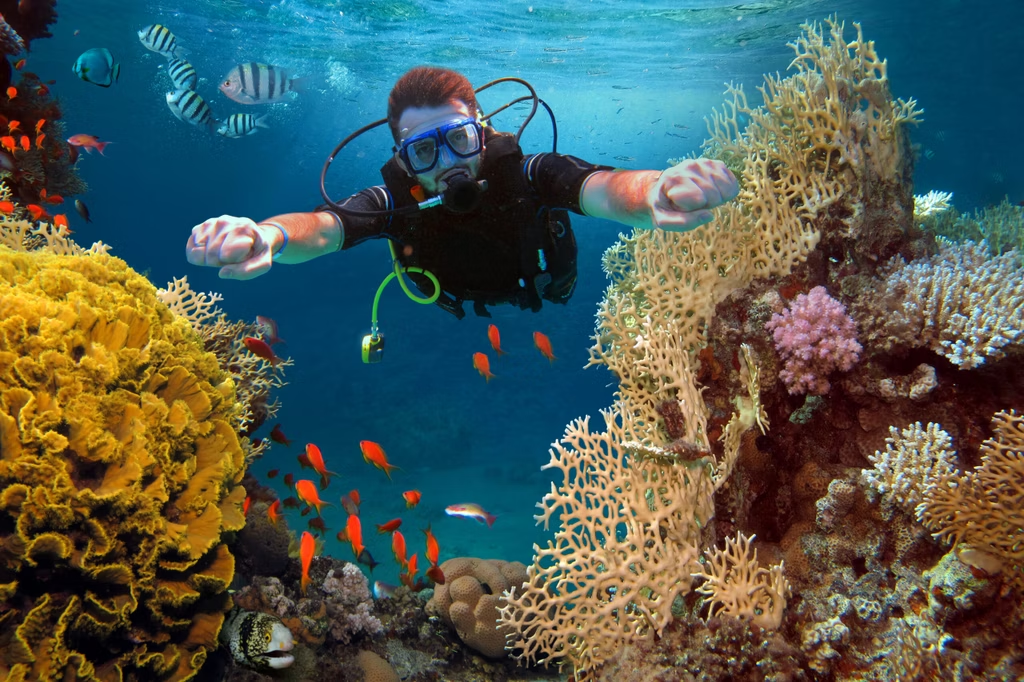
The diving environment refers to the underwater world that scuba divers explore. This includes both the natural environment, such as reefs and shipwrecks, and the man-made environment, such as dive sites that have been created for scuba diving.
The diving environment is unique in that it is a three-dimensional world that is experienced through a mask and breathing apparatus. This can take some time to get used to, but once you do, it is an amazing place to explore.